
Buying a Used Camper? How to Avoid Feeling Like an Idiot Later

We’ve been working on fixing up our house for the past three years (you can find many of our projects here), and so naturally we decided to add to our work by buying a used camper that we could ALSO fix-up.
We don’t have enough going on with working, homeschooling, raising four kids, building saunas…

We ended up with a fixer-upper RV that is SUCH a mess that at one point we genuinely considered setting the thing on fire and just walking away.
Let me back up. A few months ago, we started browsing Facebook Marketplace and other RV sites looking for the right used travel trailer—something affordable, something with “character,” something that needed just a little love.
We have no problem with painting cabinets or ripping up some laminate flooring. In fact, we kind of preferred that over something newer. I mean, what fun is a pristine trailer with no weird quirks??
If you know us, you know we believe in giving tired old houses new life with some elbow grease and YouTube tutorials.
Just like that naive girl in every rom-com who’s convinced she can change the emotionally unavailable guy, we are always up for the challenge of turning a fixer-upper into a dream.
So when we found a bunkhouse travel trailer that checked most of our boxes, we went to see it on a warm, humid evening. The sellers were friendly. They had goats. GOATS. And in my book, anyone with goats is trustworthy by default.
We walked through the camper, checking google to help us figure out what we should be looking for in a used trailer. Soft spots? Check. Leaks? Check. Propane, fridge, water? Check-ish.
The thing is, we’re just a couple of (almost 40-year-old) kids buying our first-ever travel trailer, and despite our confidence and googling, we didn’t really know what we were doing.
We thought we covered everything. But as it turns out… we didn’t. Not even close. And there were signs. Like, such obvious signs that it makes us wonder where our brains were that day.
Once we got it home and took a closer look, the problems started revealing themselves like a magician pulling really sad, soggy, stinky and possibly dead rabbits out of hats. Soft spots. Crumbling floors. A mysterious smell that defied science.
So, in the spirit of helping you not become us– stuck with a camper that needs a complete overhaul- here’s what we wish we’d done before handing over the cash.
10 Things To Do When Buying a Used Camper
Sniff Test Everywhere
This is my hill, and I will die on it. If I walk into another used trailer and see a single air freshener, I’m turning around. Run. Don’t ask questions, don’t try to justify it. Just leave.
Air fresheners are often covering up something. Not always—but often enough. The trailer we bought had no fewer than TEN air fresheners hanging inside. I told you there were signs!!

It smelled like a migraine wrapped in a headache. Underneath that wall of artificial scent? A lovely, earthy blend of mildew and old animal funk.
Always give the space a good sniff test, and if you’re overwhelmed by chemicals, there’s probably a reason.
Look for Mushrooms
Yes, actual mushrooms. We found one growing in the storage compartment. You don’t need to be a botanist to know that mushrooms growing inside a trailer = major problem.

Mushrooms don’t sprout up unless there’s moisture, organic material, and time. Translation: there’s been a leak for a while. If you see even one little fungus friend, back away slowly.
Okay, so there’s a good chance you won’t find an actual mushroom growing in your used trailer—but that’s not really the point. The point is to look for the kind of environment where a mushroom could grow.
That means moisture, darkness, poor ventilation, and organic material like damp wood or insulation—all signs that water has gotten in and sat there long enough to create a perfect little fungal paradise.
If the space smells musty, feels damp, or has soft spots or staining, those are all potential warning signs. Even without visible mold or mushrooms, the conditions alone should make you pause and investigate further.
Because if something could support a mushroom, you’re probably already dealing with hidden rot, mold, or worse
Bring a Ladder and Check the Roof
I cannot stress this enough: bring a ladder and actually look at the roof. We didn’t. We showed up, looked at the exterior from ground level, and just assumed the roof was fine—because, I dunno, optimism?
If we had taken five minutes to climb up and inspect it, we would’ve seen cracked seams, soft spots, and clear signs of neglect. But we didn’t. So we found out the hard way.

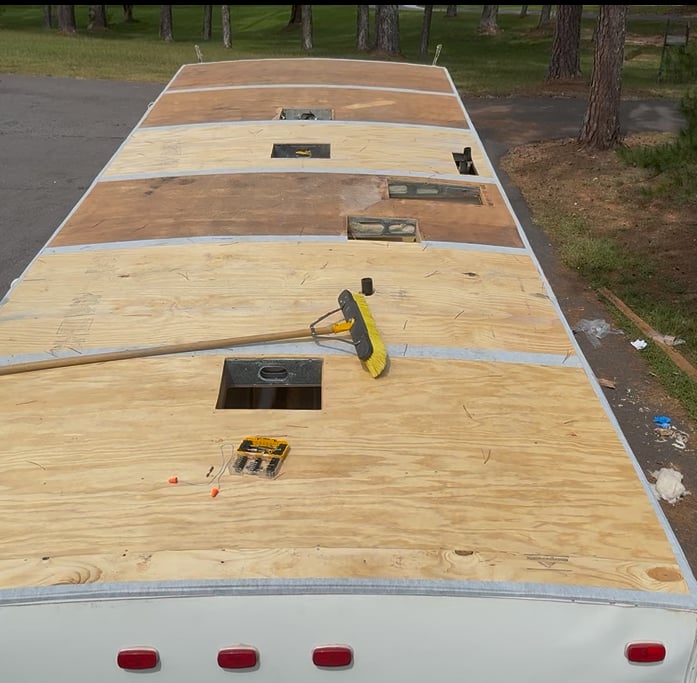
Not long after bringing the trailer home, we got hit with a massive summer storm (we live in the South—rain in the summer is basically scheduled programming). Several inches of rain later, we discovered not one, not two, but four active leaks. In some spots, the wood wasn’t just damp—it was crumbling.
It was at this point that we began to pray a tree would fall on the trailer and put us out of our misery.
Don’t be us. Bring a ladder. Get on the roof. Inspect every inch—around vents, skylights, AC units, edges, and seams.
Look for soft spots, patch jobs, sagging, and cracked or peeling sealant. A few minutes on the roof could save you thousands in repairs—and maybe your sanity.
Look for Water (and Don’t Assume It’s From a Shower)
I noticed a little standing water in the shower during the tour. I thought maybe the owners had just run it to test the plumbing. No big deal, right?
Wrong. That water was from the skylight leaking during rain—not from the shower at all. Once we had a storm, we got a nice puddle reminder.
If you see water anywhere, ask questions. Better yet, ask to hook up a hose and do a pressure test. Watch for drips around windows, vents, skylights, or seams.
Feel All the Walls—Yes, Every Side
We ran our hands along the walls but didn’t check the back. Big mistake. The back wall was soft and bubbly, a clear sign that the material underneath was rotted out.
Don’t just look—press firmly on all walls, including the front, rear, and corners. Bubbles, sponginess, or give in the paneling means something’s not right underneath.
Check Underneath the Camper
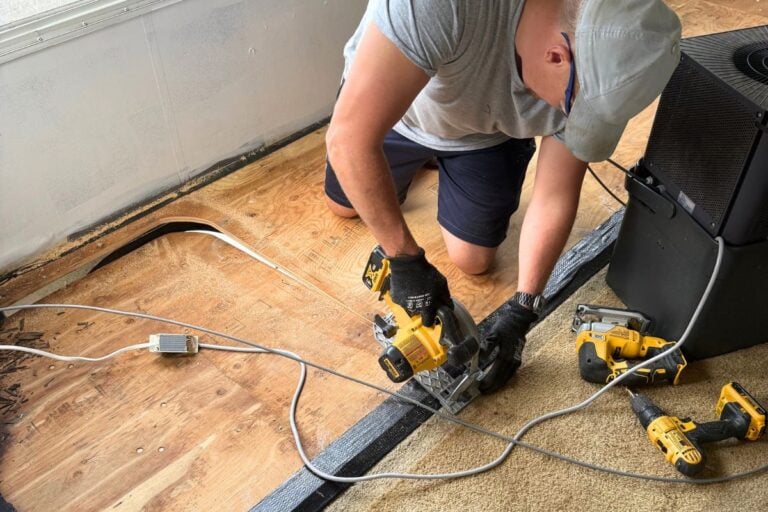
Once we got the trailer home, we removed part of the disgusting carpet and the dinette from the slide-out and found sections of the subfloor that were rotting through.
Water damage from below isn’t always obvious from inside- this was hidden by carpet and the screwed-in dinette.
When Daniel reached under the slide-out in that section, his finger nearly went straight through the flooring—it was that soft and deteriorated.

Bring a flashlight and crawl around. Look at the frame, insulation, underbelly, and flooring for rust, sagging, or soft spots.
If it’s enclosed, ask about water intrusion and look for swelling or mold on the edge of the underbelly cover.
Can I ask you a favor? If we ever consider buying a fixer-upper item – a house, a travel trailer, a flippin’ jewelry box– can you kick us in the shins and remind us that WE’RE DONE FIXING THINGS UP!?
Inspect Tires and Axles
I’m happy to say that we DID do this. And we asked for a discount on the price because the tires were so old and worn.
Worn tires aren’t just bad—they’re dangerous.

Check the DOT date code (stamped on the side of the tire) and look for cracking, bald spots, or uneven wear.
Inspect axles for rust, bent components, or signs of leaking grease. If it has brakes, make sure they work too.
Test Every System—Don’t Just Take Their Word for It
Here’s one thing we actually got right—we tested the major systems. I still have to include it here because it’s important, and any seller should be prepared to demonstrate that everything works.
We had the seller fire up the fridge, light the stove, run water through every faucet, and flip every light switch and outlet.
Don’t be shy about this part. Bring a generator or ask to hook up to shore power, and take the time to test the AC, furnace, fridge, lights, water pump, water heater, and any slide-outs.
Sellers might not be trying to hide anything, but they also might not realize something isn’t working. Either way, you want to find out before you buy.
Look for Stains or Discoloration in Good Lighting (Seriously—Bring a Flashlight)
Trailers can be surprisingly dark, even in the middle of the day with all the lights on. We missed some of the staining simply because the lighting was poor.
We did notice stains on the carpet during the initial walkthrough, but since we were buying a 20-year-old trailer, we expected some wear and tear.
We planned to rip out the carpet anyway, so we didn’t think much of it.

But later—once we had better lighting and actually took a closer look—we found brown stains on the carpet covering the bottom of the bunk beds in the back.
I’m not exactly sure what it is… and honestly, I’m not sure I want to know. All I do know is: it has to go.
Moral of the story? Bring a flashlight. Check every corner, especially near floors, ceilings, and behind cushions or curtains.
What you don’t see during the walkthrough can become a very unpleasant surprise later.
Don’t Be Blinded by the Price—Do Your Research
I wish I could say we scored an amazing deal on this trailer—but we didn’t. We spent months browsing listings, compared dozens of options, and thought we were paying a fair price.
In hindsight, knowing what we know now about the hidden issues, we probably should have paid half of what we did.
The truth is, price alone doesn’t tell you whether something is a good deal. A trailer that looks “affordable” can still be a money pit once you factor in the cost of repairs—especially for water damage, structural problems, or failing systems. That stuff adds up fast.
Before buying, research comparable models in your area and pay attention to condition, not just year or layout. Check listings on Facebook Marketplace, Craigslist, RVTrader, and even auctions. Ask yourself: What would it cost to repair known issues? Would it still be worth it?
Be realistic about your budget, know your limits, and don’t let a “good price” talk you into a bad decision.
Sometimes the smartest move is walking away.
Where We Go From Here
We’re now elbows-deep in our fixer-upper and learning more than we ever wanted to about travel trailer construction. But hopefully, our disaster is your lesson.
If you’re buying used, take your time, do your homework, and maybe—just maybe—you won’t end up with a mushroom in your storage bay.
Also! We’ll be blogging all about fixing up our used camper- the good the bad and the ugly. Want to see the (praying hands) transformation? Subscribe below so you don’t miss a new post!
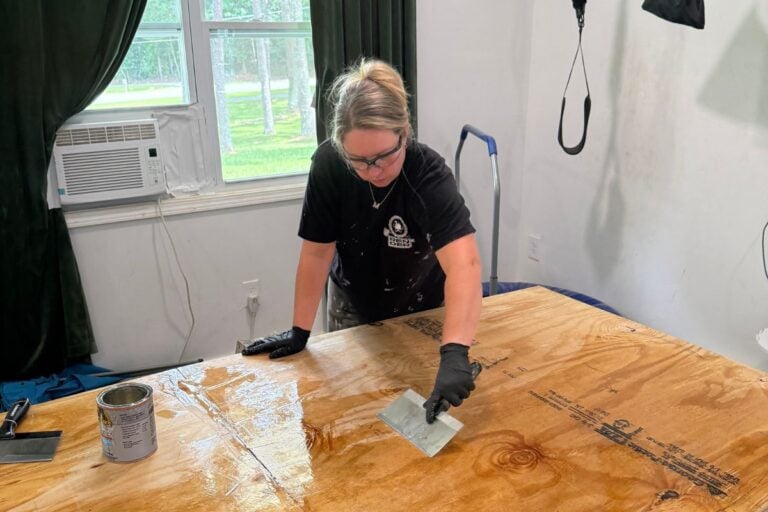
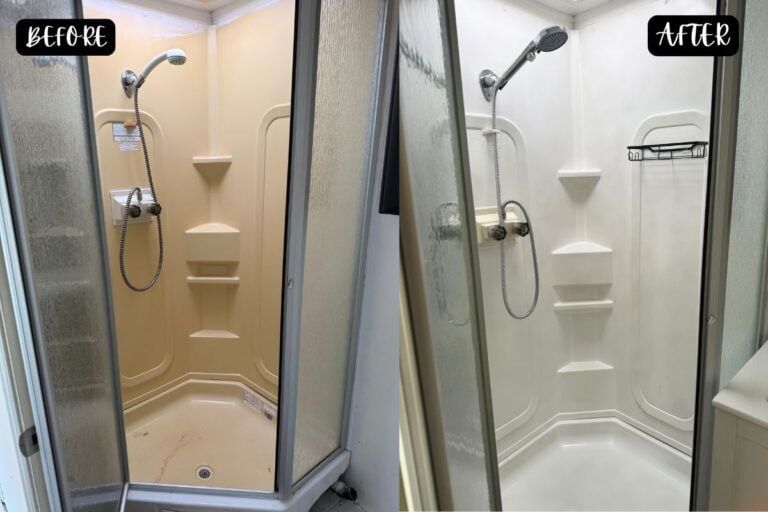
I’ve started painting the inside of the camper. By no means is it anywhere near being finished, but it does give me hope that we can turn this hunk of junk into a cute space for our family…once we’ve completely overhauled the roof and who knows what else.


Other Projects You Might Enjoy
Basement Bathroom Makeover + New Tongue and Groove Wood Ceiling
Ugh what a nightmare 😩😩 on the plus side, you’ve somehow preserved your sense of humor! I promise to drag you away kicking and screaming from any future houses more than 15 months old 🫡
THANK YOU! Lol!
Oh my, that was so interesting (and entertaining) to read!
You have learned so much through this experience, I’m sorry you’ve had to go through this though, learning all these things the hard way.
Best wishes and love going forward!
Thank you!!
You are a good writer! “Fungus friend”–I love it! I’m so sorry that this has been such an ordeal and it isn’t great to feel like you overpaid. On the plus side, this will give you plenty of blog material. The white cabinets are such an improvement! So much brighter! Nice work!
Thanks Inger!
This is great advice for anyone considering the purchase of a used travel trailer. A well written detailed assessment of what to look for!
Thank you so much!
Oh my goodness. I’m so stressed out for you guys! But what a helpful list and blog post for the rest of us!
Thanks Kenj!